


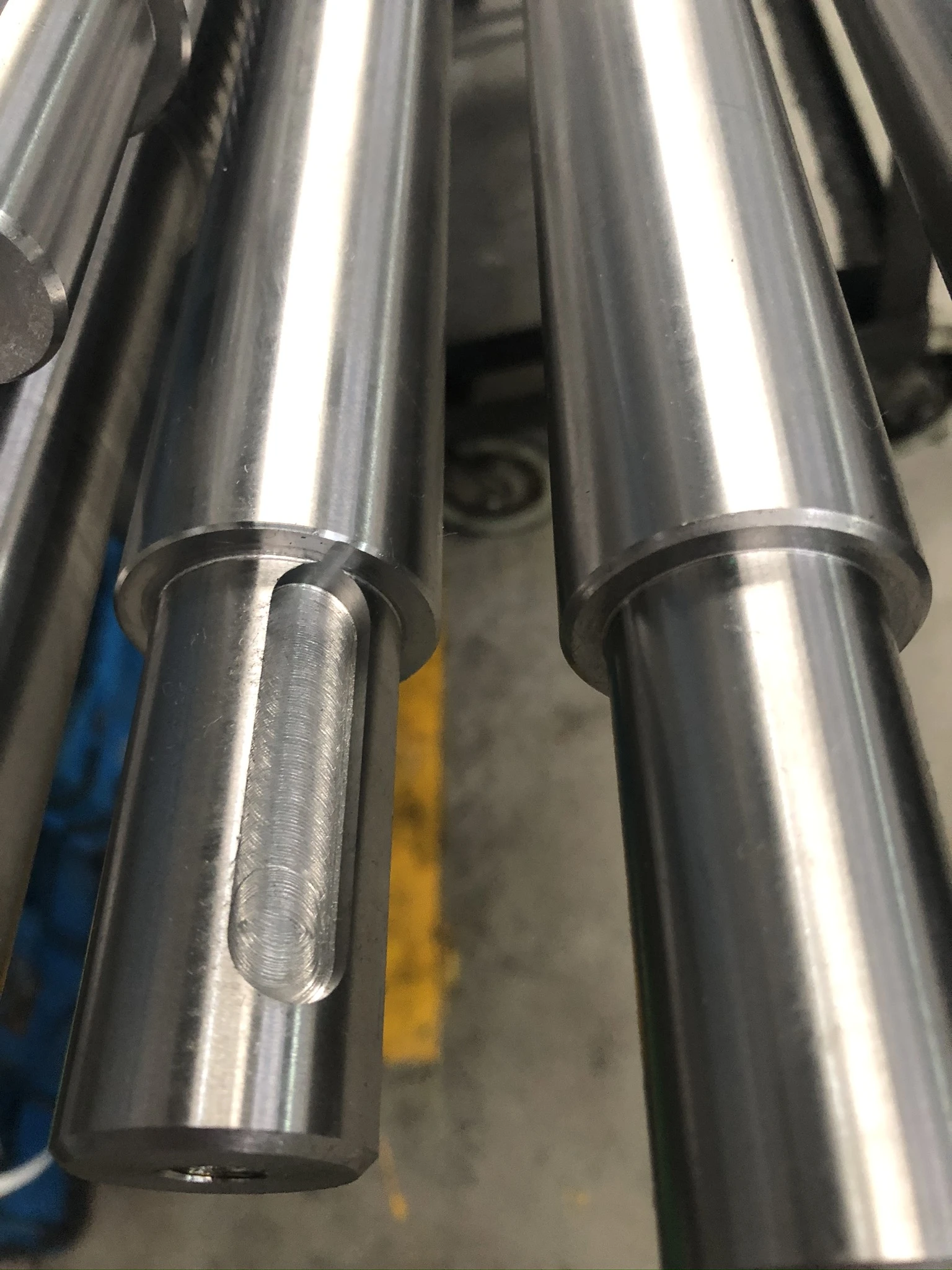
One shaft has a long milled flat near the end. The one beside it has a plain round section instead. Both have stepped ends, but they are clearly meant for different mounting arrangements. These small differences are worth checking before the shafts leave the workshop.
This batch of Custom Machined Guide Shafts is being prepared for shipment to Turkey. The main shaft surfaces have been finished, and the ends have been machined to suit the required connections. On some machines, a flat provides a contact area for a fastening screw. Other assemblies need a smooth journal that fits directly into a support or clamping component.
Turkey has a sizeable machinery manufacturing industry. Around Bursa, automotive parts production and textile machinery have been established for many years. Factories in these sectors use various feeding units, positioning mechanisms and mechanical handling equipment. Many of these machines still rely on round guide shafts and linear bearings for straightforward movements.
Replacement work is one reason customers ask for special end machining. An older machine may use a standard shaft diameter, but the end connection was made specifically for that machine. Buying a plain shaft of the same length will not necessarily solve the problem.
We have seen drawings where the shaft diameter is correct, but the shoulder position or milled section needs to be changed. A few millimeters can affect how the shaft sits inside its support. That is why we check the end dimensions separately, even when the customer has already confirmed the overall length.
Our Custom Machined Guide Shaft range includes different diameters and lengths, with CNC turning, milling, grinding, drilling and threading available. Customers can send drawings or samples for OEM/ODM machining. Standard sizes are also available for smaller orders.
For this Turkey shipment, the finished surfaces will need protection before the shafts are placed into wooden cases. Long polished shafts should be kept apart during sea transportation, particularly around the machined ends.
Before packing, we put the drawings beside the shafts and check the end details once more. On the left one, the position of the milled flat matters. On the right, it is the length of the smooth journal. These are easy to mix up if someone only checks the overall length.


