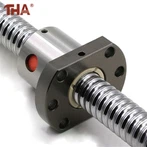
In modern manufacturing industry, the machining accuracy of CNC machine tools is an important factor to determine the product quality. As one of the core components of CNC machine tools, the material selection of linear guide has a direct impact on the overall performance and machining accuracy of machine tools. The characteristics, performance and specific effects in practical application of commonly used materials are analyzed comprehensively.

Carbon steel linear guide rail is the most common choice, mainly because of its high strength and good wear resistance. After proper heat treatment, such as quenching and tempering, carbon steel can achieve high hardness and toughness, ensuring the guide rail to maintain a stable running state under the conditions of high load and high frequency use. The carbon steel guide rail has low cost and mature manufacturing technology, and is suitable for various types of CNC machine tools. However, the carbon steel guide rail has high environmental requirements and is easy to be corroded, so it needs effective protection and regular maintenance during use.
Stainless steel linear guide rail has excellent corrosion resistance and high hardness, and is suitable for use in humid or corrosive gas environments. Stainless steel guide rails are usually used in CNC machine tools that require higher accuracy and longer service life. Although the hardness of stainless steel is slightly lower than that of heat-treated carbon steel, its wear resistance and corrosion resistance make it a better choice in specific environments. The cost of stainless steel guide rails is high, but it reduces the maintenance frequency and cost and improves the overall efficiency of machine tools.
Ceramic linear guide rail is a relatively new choice in high-precision machining, which has extremely high hardness, wear resistance and excellent corrosion resistance. Ceramic materials have a very low thermal expansion coefficient, which can maintain dimensional stability under extreme temperature conditions, which is particularly important for high-precision machining. Ceramic guide rails also have their shortcomings, such as high brittleness and easy to be broken by impact, so special attention should be paid to protection and operation during use. The manufacturing cost of ceramic guide rails is high, and it is mainly used in the field of high-end precision machining.
In high-precision machining, the temperature change will cause the thermal expansion and contraction of the guide rail, which will affect the machining accuracy. Because of its low thermal expansion coefficient, the ceramic guide rail can keep its size stable when the temperature changes, which is suitable for machining in high precision and high temperature environments. The thermal expansion coefficient of stainless steel guide rail is lower than that of carbon steel, and it can also maintain good temperature stability to some extent.

The vibration resistance of materials is also an important factor affecting machining accuracy. High-precision machining requires the guide rail to be stable in high-speed motion to reduce the influence of vibration on the workpiece. Ceramic guide rail has good anti-vibration performance because of its high hardness and low density, which can reduce vibration and noise in high-speed movement. After precision machining and installation, carbon steel guide rail and stainless steel guide rail can also provide good stability, but ceramic guide rail performs better in situations with extremely high precision requirements.
The manufacturing industry usually chooses the most suitable linear guide rail material according to the specific processing needs and environmental conditions. For example, in high-precision mold processing, ceramic guide rails can ensure the high precision and smoothness of the workpiece because of their excellent thermal stability and vibration resistance. In food and pharmaceutical industries with high hygiene requirements, stainless steel guide rail has become the first choice because of its corrosion resistance and easy cleaning.
The influence of linear guides with different materials on the machining accuracy of CNC machine tools is mainly reflected in hardness and wear resistance, thermal expansion coefficient and temperature stability, vibration resistance, service life and maintenance requirements. By choosing the appropriate guide rail material, the manufacturing industry can optimize the performance of machine tools and improve the machining accuracy and production efficiency according to the specific needs and processing environment. With the continuous progress of material science and manufacturing technology, more new materials and optimized processes will improve the overall performance of CNC machine tools and provide stronger support for high-precision machining in the manufacturing industry.
Whatsapp/wechat:17769815516/17769816967
Email:admin@gyballscrew.com
gykristyliu@gmail.com
sales@gyballscrew.com