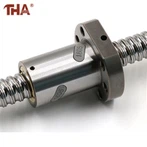
In modern mechanical equipment, linear guides are regarded as core components, and their criticality is obvious. Linear guides consist of three parts: sliders, guides, and connecting plates. Their main responsibilities are to guide, support, and ensure that moving parts can move accurately and stably in a straight line. With the development of science and technology, various precision machine tools and automated production lines are increasingly using linear guides to transmit power or loads, thereby improving production efficiency and reducing costs. However, in real usage scenarios, linear guides often encounter wear problems, which not only reduces the accuracy and working performance of the equipment, but also may cause various failures and even stop the equipment from working. In addition, due to the influence of environmental factors, linear guides may also deform or fail, causing the entire system to lose its normal working ability. Therefore, in-depth research on the root causes of linear guide wear and the corresponding prevention methods is crucial to ensuring the stable operation of the equipment and extending its service life.
What are the main types of linear guide wear?
Surface wear
In linear guides, surface wear is considered to be one of the most common forms of wear. It is a kind of wear failure phenomenon caused by relative sliding of linear guide rails due to various reasons during operation. Its main characteristics and manifestations include scratches, pits or wear marks on the surface of the guide rails. On high-speed precision machining machine tools, the wear of the guide rails is often accompanied by severe impact and vibration, and even causes the machine tool to fail to work properly. Such wear is mostly caused by friction between the guide rails and moving parts, the intrusion of dust and impurities, and improper lubrication. Under some harsh conditions, such as high-speed and heavy-load working environments, the guide rails may also suffer from severe abrasive wear. Due to surface wear, the accuracy and smoothness of the guide rails will be affected, which will further have an adverse effect on the operating performance of the equipment.
Fatigue wear
The reason for fatigue wear is that the guide rails are affected by periodic stress when running for a long time and at high load. When the guide rails are in a high-speed motion state, the metal friction pair under the impact load is prone to fatigue wear. The typical manifestations of this type of wear are cracks, shedding or ruptures on the surface of the guide rails. After the guide rails fail due to fatigue wear, it not only affects the normal operation of the equipment, but also may cause serious safety accidents. Fatigue wear is a gradual process. As the running time increases, the strength and toughness of the guide rail will gradually decrease, which will eventually lead to increased wear.
Corrosion wear
Corrosion wear is caused by the contact between the guide rail and corrosive gas or liquid. In actual work, it is often encountered that the guide rail is severely worn or even completely loses its load-bearing capacity, thus affecting normal use. Such wear usually leads to undesirable phenomena such as rust, corrosion pits or oxide layers on the surface of the guide rail. These defects form a large number of microstructures such as dents, grooves and scratches on the guide rail, which affects the friction characteristics and lubrication effect of the material. Due to corrosion and wear, the accuracy and functional performance of the guide rail may be affected, and other problems may also occur, such as the jamming or difficulty in moving the guide rail.
what operational or environmental factors will accelerate the wear of linear guides?
Operational factors
- Overload operation: When the load of a device exceeds its predetermined design standard, the guide rail may be subjected to excessive pressure, which may cause it to wear faster.
- Improper installation method: The installation accuracy of the guide rail will directly determine its working performance and service life. Therefore, the machine tool must be inspected before installation, and the appropriate guide type and size must be selected according to the actual situation to ensure the machining accuracy requirements. Improper installation operations, such as inaccurate installation positions or insufficient preload, may aggravate the wear of the guide rails.
- Improper maintenance: If regular cleaning, lubrication and inspection are not performed, dust, impurities and oil stains may accumulate on the surface of the guide rails, thereby reducing their lubrication effect and wear resistance.
Environmental factors
- Dust and other impurities: When dust and impurities enter the gap between the guide rails and moving parts, friction and wear will increase.
- In high humidity and corrosive gas environments, the corrosion and oxidation rate of the guide rail surface will accelerate, resulting in a decrease in its wear resistance.
- Temperature fluctuations: When the temperature changes, the guide rail material may experience thermal expansion and contraction, which may lead to stress concentration and increased wear.
How does material selection affect the wear resistance of linear guides?
Selection of guide rail materials
The selection of suitable guide rail materials plays a key role in its wear resistance. At present, when studying these materials at home and abroad, they are generally mixed to improve wear resistance, or by changing the content of various alloy elements to improve its comprehensive performance, so as to make it an ideal wear-resistant structural material. Common guide rail materials include steel, cast iron and aluminum alloy. Among them, steel shows relatively high strength and hardness, but its wear resistance is not satisfactory; cast iron performs well in wear resistance and shock absorption, but its strength is relatively weak; by comparing several guide rails commonly used in high-speed precision machine tools, it is found that there are large differences between guide rails of different materials. Aluminum alloy has a relatively light weight and excellent processing characteristics, but its wear resistance is not very strong. Therefore, in the process of selecting guide rail materials, it is necessary to comprehensively weigh its performance in multiple aspects such as strength, hardness, wear resistance and processing performance.
Selection of matching material
The wear resistance of the guide rail is significantly affected by the compatibility between the matching parts (such as sliders, bearings, etc.) and the guide rail. Due to the presence of a large number of grooves on the surface of the friction pair, lubrication occurs between the mating parts and the guide rail, so that a lubricating oil film is formed between the friction pairs, which effectively increases the friction force. When the material of the mating parts is incompatible with the guide rail, it may cause an increase in the friction coefficient and an increase in wear. In addition, the surface roughness of the mating parts also has a certain influence on the lubrication condition. Therefore, when selecting the material of the matching parts, it is necessary to ensure that it is completely matched with the material of the guide rail and has excellent wear resistance and lubrication properties.
What are the effective lubrication strategies that can slow down the wear of linear guides?
Selection of lubricants
In order to reduce the loss of linear guides, it is particularly important to choose the right lubricant. At present, the commonly used lubrication methods at home and abroad are mainly lubricating oil and mineral oil. Lubricating oil, grease and solid lubricant are all common types of lubricants. At present, the two types of composite products commonly used in the market are grease and lubricating oil. Lubricating oil is particularly suitable for use in high-speed and heavy-load environments due to its excellent fluidity and lubricating properties; grease is particularly suitable for use in low-speed, high-load or long-term lubrication environments due to its excellent adhesion and lubricating properties; solid lubricants are a very suitable choice for high temperature, high load or occasions where lubricant leakage needs to be prevented. In the process of selecting lubricants, multiple factors such as the material properties of the guide rail, the working environment and the load conditions must be considered comprehensively.
Selection of lubrication method
Common methods of lubrication include drip lubrication, oil spray lubrication, oil mist lubrication and grease lubrication. Among them, drip lubrication is currently the most commonly used and most effective lubrication method. Drip lubrication technology is particularly suitable for low-speed and light-load environments; oil spray lubrication technology is particularly suitable for high-speed and heavy-load applications; oil mist lubrication is particularly suitable for those applications that need to prevent lubricant accumulation and contamination; both types of lubrication have good lubrication performance. Grease lubrication is very suitable for applications that require continuous long-term lubrication and need to prevent lubricant leakage. For machine tools, due to their large structural size, high movement speed and high precision requirements, grease lubrication is one of the more reasonable options. When deciding on the lubrication method, multiple factors such as the material of the guide rail, the operating environment and the load condition must be considered comprehensively.
Maintenance of the lubrication system
In order to ensure that the lubrication system can work properly, regular inspection and replacement of lubricants are essential. In order to keep the lubricating oil in good condition at all times, regular inspection and timely addition of grease are required. In addition, the lubrication system needs to be thoroughly cleaned and maintained to remove accumulated impurities such as dust, impurities and oil stains. Here is a simple and effective method - apply lubricant to the guide rail so that it contacts the sliding surface and forms an oil film. Doing so can not only enhance the effectiveness of lubrication, but also help extend the service life of the guide rail.
How to implement and maintain effective linear guide wear prevention measures
Regular inspection and maintenance
In order to ensure the stable operation of the linear guide rail, it is essential to develop a regular inspection and maintenance plan. In order to ensure that the guide rail works normally for a long time, it must be regularly inspected. This involves checking the accuracy, appearance quality, lubrication and wear of the guide rails. In order to ensure the normal operation of the guide rails and extend their service life, the various properties of the guide rails must be tested regularly. In addition, the guide rails must undergo necessary cleaning, lubrication and fixing steps.
Wear monitoring and early warning
By using cutting-edge wear detection technologies and methods, such as vibration analysis, sound monitoring and temperature monitoring, we can promptly identify the wear condition of the guide rails and issue early warnings accordingly. When diagnosing the wear state of the guide rails, by detecting the amount of wear under different working conditions, a certain mathematical model is used to predict the various failure forms that may occur during the life cycle of the guide rails. This not only helps prevent the occurrence of failures, but also reduces maintenance costs and enhances the stability of the equipment.
Necessary repair or replacement
In the event of severe wear or failure of the guide rails, it is necessary to repair or replace them quickly. For the repair and maintenance of the guide rails, in addition to ensuring normal use conditions, it is also necessary to consider how to improve the reliability of the guide rails during operation. This involves replacing severely damaged guide rail parts, repairing damaged guide rail surfaces, and adjusting the accuracy and preload of the guide rails. Before repair or replacement, the entire guide system must be disassembled and inspected, and the relative position relationship between each component must be measured. In addition, the repaired or replaced guide must be tested and verified to ensure that it meets the design requirements.
Conclusion
The main causes of wear of linear guides include surface wear, fatigue wear, and corrosion wear. Under certain conditions, linear guides will produce partial or overall damage, resulting in reduced motion accuracy or even failure, thereby affecting the processing quality and production efficiency of machine tools. In order to reduce the wear rate of guides and increase their service life, we must implement a series of preventive strategies. The most important of these is to reduce or eliminate various factors that affect the life of the guides, such as the material, structure and assembly quality of the friction pair. This involves selecting appropriate materials for guides and matching components, formulating appropriate lubrication plans, regularly inspecting and maintaining the guides, and adopting cutting-edge wear detection technologies and means. In addition, the linear guides should be properly processed during the manufacturing process to reduce the dimensional deviation of the guides. By taking these preventive measures, we can ensure that the linear guides work stably and further extend their service life, thereby enhancing the stability and overall performance of the equipment.