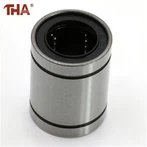
Linear guides play a core role in modern mechanical equipment. Their main function is to ensure that moving parts can achieve accurate and smooth movement in a linear direction. Due to the complex working environment and long-term harsh conditions, higher requirements are placed on linear guides, such as high precision, high reliability, and high wear resistance. In many industrial fields, such as automated production lines, CNC machine tools, and precision measuring equipment, the performance of linear guides directly affects the accuracy and service life of the entire equipment. Because linear guides have good load-bearing capacity, wear resistance, and thermal conductivity, they are widely used in the transmission connection between the machine tool spindle box and the workbench. However, in real usage scenarios, linear guides often encounter unstable motion problems, which not only hinders the normal operation of the equipment, but may also cause processing errors and equipment damage and other serious effects. In addition, due to the combined influence of the machine tool's own structural characteristics and external factors, linear guides are prone to vibration and noise. Therefore, solving the problem of unstable linear guide motion becomes particularly critical.
What factors may cause unstable linear guide motion?
Improper installation
During the installation of linear guides, if the prescribed standards are not strictly followed, the instability of the guide motion may be caused. If the errors in the guide operation are not well controlled, it is very easy to cause unstable motion and vibration. Common installation errors include inaccurate installation position of the guide, too large or too small gap between the guide and the mounting surface, and loosening of the mounting bolts or insufficient preload. There are also some other reasons for guide deformation, such as loose mounting screws or improper tightening nuts. Such errors will have a direct negative impact on the accuracy and stability of the guide, which may cause unstable motion.
The lubrication effect is not ideal
Lubrication plays a vital role in ensuring the stable operation of linear guides. In addition, when there is oil on the surface of the guide, it is easy to cause serious contamination of the friction pair, causing creeping. If the lubrication is insufficient or the operation is improper, the guide may suffer excessive friction and wear during movement, which will not only reduce the service life of the guide, but also cause its movement to become unstable. Therefore, the selection of appropriate lubricants and lubrication methods to ensure that the guide rails are adequately lubricated has become a solution to the motion
The guide rails have worn out
During the long-term use of the guide rails, friction and wear will cause the surface accuracy to gradually decrease, which will in turn cause the instability of the movement. There are many factors that affect the performance of the guide rails, among which abrasive wear is the most common. The main factors leading to wear are improper selection of guide rail materials, poor lubrication effect, and harsh use environment. If the guide rail fails and cannot be repaired in time, it will cause huge economic losses to the entire equipment and even endanger personal safety. Therefore, it is crucial to have a deep understanding of the causes and processes of guide rail wear and implement effective preventive measures to extend the service life of the guide rails and ensure their stable operation.
External interference
The smoothness of the linear guide rail's movement may be affected not only by internal factors such as installation, lubrication and wear, but also by external factors. The accuracy and stability of the guide rail may be affected by vibration or temperature fluctuations. In addition, due to the influence of the external environment, the linear guide rail may have various faults or even damage. Therefore, in the design and application stage of the product, it is necessary to deeply consider various external factors and implement appropriate strategies to slow down or eliminate the adverse effects they bring.
How to check and adjust the installation accuracy of linear guides?
In order to ensure that the linear guide can work stably, we first need to carefully check and properly adjust its installation accuracy. Since the guide rail itself has a large error, the correct method must be used during installation to ensure its normal operation. Before installation, the guide rail and the installation part must be thoroughly cleaned and inspected to ensure that there is no oil stains and any damage on their surface. At the same time, it is necessary to ensure that the connection between the guide rail and other equipment does not loosen or deform, thereby improving the overall performance of the linear guide. During installation, the regulations must be strictly followed to ensure that the parallelism and verticality of the guide rail meet the expected standards. In addition, attention should be paid to whether the connection method between the guide rail and the equipment is reasonable and reliable. After completing the installation, we still need to conduct a series of tests to ensure that the installation accuracy of the guide rail meets the predetermined design standards.
What effective lubrication methods and lubricants are suitable for linear guides?
In order to ensure the stable operation of linear guides, it is very important to choose the right lubrication method and lubricant. The correct selection of lubricants plays an important role in ensuring the service life of guides. Common ways of lubrication include dripping, spraying and oil mist. When choosing a lubrication method, the actual use and needs of the guide should be considered. Different types of lubricants also have a great impact on the service life of the guides, so when choosing, a reasonable choice should be made based on the specific situation. When choosing lubricants, we also need to consider factors such as the material and working environment of the guides. Lubricating oil is the key to ensuring the normal operation of linear guides. It must be regularly inspected and maintained to ensure that the guides have good performance. In the process of selecting lubricants, it is necessary to fully consider its lubrication characteristics, antioxidant capacity and corrosion resistance.
How to monitor and prevent the wear of linear guides?
In order to extend the service life of linear guides and ensure their stable operation, the wear of the guides must be monitored and prevented. Therefore, in practical applications, it is necessary to pay attention to the research on linear guide wear monitoring technology. Common wear detection methods cover technologies such as vibration analysis and sound detection. In practical applications, laser vibration measurement and ultrasonic scanning methods are used to detect and evaluate the wear of the guide rails. Using these advanced technical means, we can quickly detect the wear condition of the guide rails and take appropriate repair measures accordingly. In practical applications, laser scanning technology can be used to measure the surface of the guide rails to obtain information on the wear amount of the guide rails. In addition, we can also avoid the wear of the guide rails by improving the design and optimizing the use environment. In practical applications, various methods must be reasonably selected for detection and judgment according to specific working conditions to ensure their accuracy and reliability. For example, choose appropriate guide rail materials, enhance lubrication effects, reduce the use load, etc. At the same time, attention should also be paid to maintenance work, and the surface and internal impurities of the guide rails should be cleaned regularly. If the guide rails are worn, they should be repaired or replaced immediately to prevent adverse effects on the normal operation of the equipment.
How to reduce or eliminate the influence of external factors on the smoothness of linear guide motion?
In order to reduce or eliminate the adverse effects of external factors on the stability of linear guide motion, it is necessary to implement corresponding safety measures. For the components in the guide rail system, due to their inherent characteristics and interference from many factors such as external environmental conditions, they will cause different degrees of errors. In order to effectively control vibration and shock, we can use shock-absorbing devices and vibration isolation methods to reduce the adverse effects of vibration and shock on the guide rail. Considering the temperature fluctuation, we can implement a temperature management strategy to ensure that the temperature of the guide rail remains stable during operation. In addition, when considering friction, we must also pay attention to the relationship between the friction factor and the speed and the relationship between the friction coefficient and the load size. In addition, we need to consider other external conditions that may affect the stability of the guide rail and formulate appropriate response strategies for this.
Conclusion
In summary, to solve the problem of unstable motion of linear guide rails, it is necessary to consider comprehensively from multiple dimensions. The most important of these is to ensure the good condition of the linear guide rail and the correct use of lubricants. This includes checking and adjusting the installation accuracy, selecting appropriate lubrication methods and lubricants, monitoring and preventing guide rail wear, and reducing or eliminating the influence of external factors. Among them, correct design and reasonable installation are the most important links. In order to ensure the stable operation of the linear guide rail and improve the overall performance and accuracy of the equipment, we must consider these factors in an all-round way and implement a strong response strategy. At the same time, continuous observation and maintenance of the guide rail is a key step to ensure its stable operation.