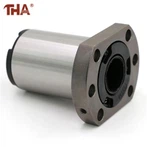
The linear axis is a commonly used mechanical element that guides straight movements. The common types of prefectures include crankshafts, straight axes and soft shafts. It is used to use the unlimited itinerary with the cylindrical shaft. Because the bearing ball is in contact with the axis, the load is small. The steel ball rotates with smaller friction resistance to obtain high -precision stable movement. The linear axis is widely used for precision equipment such as electronic equipment, tension test machines and digital three -dimensional coordinate standard, as well as the sliding part.
1. It has the same functions as the linear guide, both as support and movement. The difference between the two is the installation site, and the shape is different. The light shaft is circular. The linear guide is generally square and has a fixed slider part. The straight -line light shaft is generally fixed with both ends, and the middle suspended connection parts include all or most of the radial radial of the light shaft. The linear guide is generally close to the equipment installation base, which is fixed with bolts.
What are the differences between linear guide rails and linear axis?
2. The linear axis is used in linear bearing and cylindrical shafts. Due to the contact with the bearing outer sleeve, the steel ball is rolled with a small friction resistance, so the linear light shaft has small friction and relatively stable. It does not change with the speed of the bearings.
3. The straight -line guide rail is more accurate than the linear bearing, greater load, and stronger stability.
4. The consumption of the linear axis also has its limitations. The main thing is that the straight -line bearing impact load capacity is poor and the carrying capacity is poor; there is a large vibration and noise during high -speed exercise. This is a problem faced by the industry. Essence