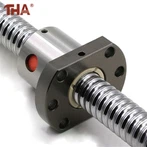
The continuous development of industrial production in the 21st century has increased the frequency of use of various mechanical products. As a more important part of all kinds of machinery, linear bearings can be said to have a very decisive role. Whether it is bearing performance, life, or its precision and reliability, it has a key impact on different mechanical equipment.
The related rotation accuracy and dimensional accuracy of linear bearings are designed according to our country's ISO and JIS standards. Machines with different functions have different high-precision requirements for bearings. For some machines that require high-speed operation, most of the time we recommend using bearings with bearing classification 5 or above.
Regarding the rotational accuracy of linear bearings and related dimensional accuracy, both can be measured according to two grades of standards. The first is the national standard (GB/T), and it can also be measured and designed in accordance with the second international standard (ISO). The standards of these two levels can correspond to each other when they are not the same, thereby replacing the other's standards.
Generally, when linear bearings are installed, the installation space will be limited to a certain extent. Different shaft diameters are designed according to different types of machinery. Therefore, we can conclude that the different types of linear bearings, as well as the selection of different types and sizes, are completely determined according to the relevant inner diameter of the bearing. The standard size tables of different bearings in our country are systematically compiled based on the relevant international standard inner diameter sizes.
The above is our brief introduction to the linear bearing dimensional accuracy specification. We hope that it can help merchants have a deeper understanding of the relevant knowledge about the bearing, so as to better utilize and use the performance of the linear bearing.